Air Line Leak Detection and Repair Before Pressure Drops Strand You
Air leaks start small and quiet, often hidden behind a crossmember or inside a fitting. Over time, they make the compressor work harder, slow down pressure buildup, and lead to failed leak-down tests at inspections. A large enough leak can drop pressure to the point where spring brakes apply on their own. Wetcreek Repair Solutions finds and repairs air leaks on semis, trailers, and commercial trucks throughout Joplin, MO.
How We Find and Fix Air Leaks on Trucks and Trailers
We start with leak-down tests, measuring how fast pressure drops with the brakes released and again with them applied. That tells us how serious the leak is and which part of the system to focus on. From there, we trace leaks with soap solution and careful listening along lines, fittings, valves, and chambers until every source is found. Repairs use the correct tubing, fittings, and seals, followed by a final leak-down test to confirm the system holds pressure.
Static and Applied Leak-Down Testing
Soap and Audible Leak Tracing
Gladhand Seal and Gladhand Replacement
Push-to-Connect Fitting Repair
Nylon Air Line Replacement
Rubber Air Hose Replacement
Trailer Air Line and Coil Repair
Valve and Tank Leak Repair
Roadside Truck Repair and Shop Service for Every Air Leak
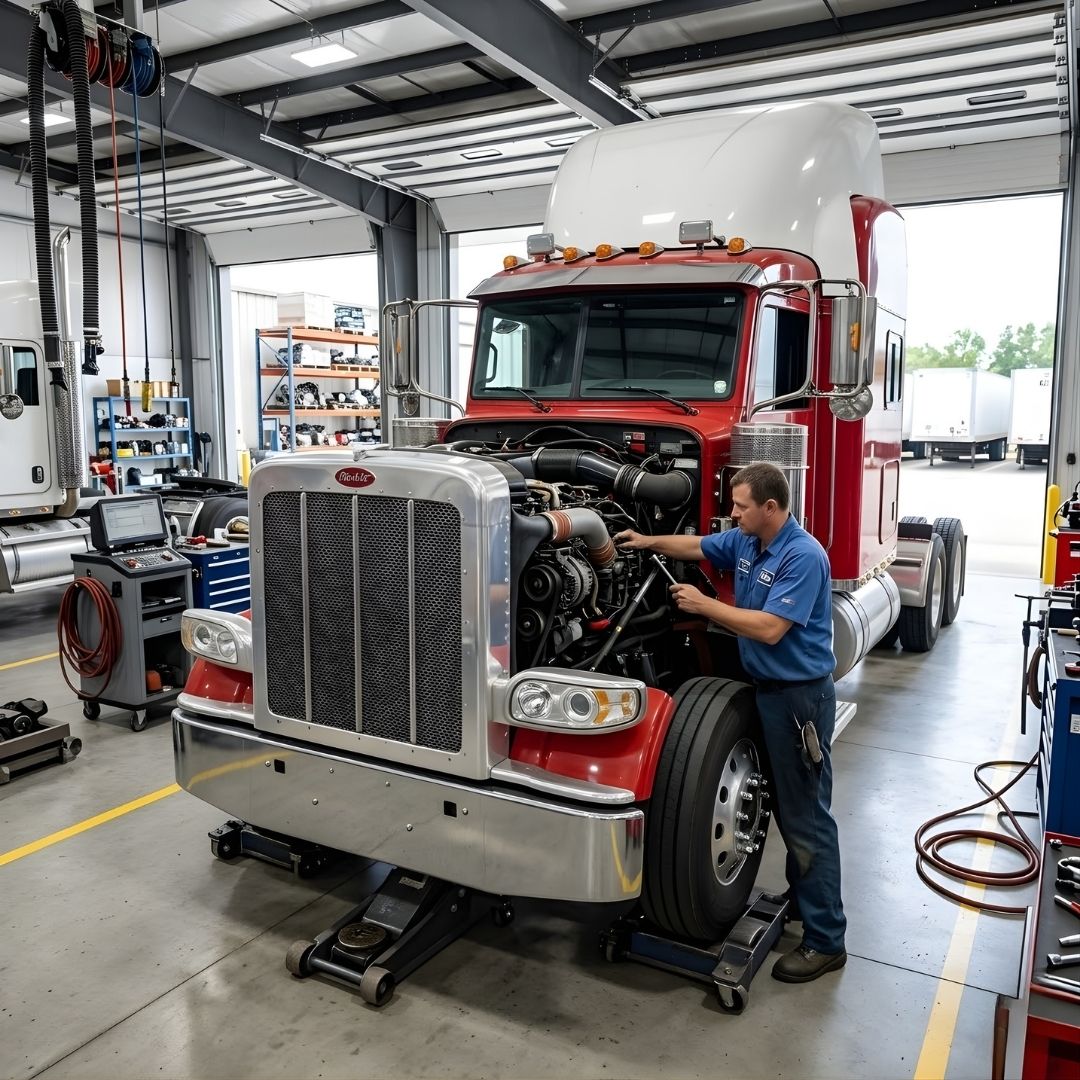
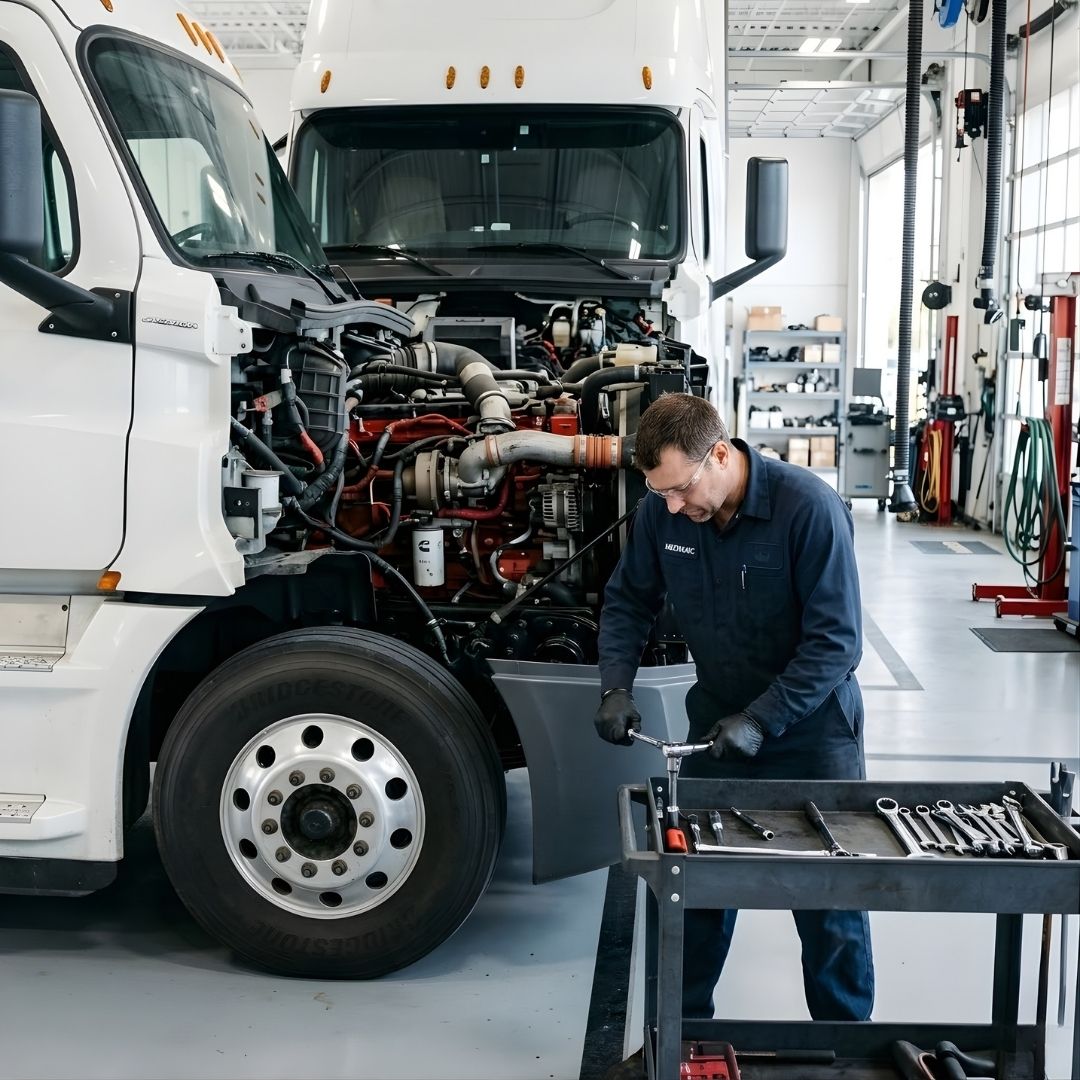
Some leaks can wait for a scheduled visit, while others can stop a truck on the highway. Our roadside truck repair technicians carry common fittings, tubing, and gladhand seals to fix many leaks on the spot, and our truck road service in Joplin, MO responds when pressure is dropping fast. Larger jobs, like rerouting chafed lines or replacing valves, are handled in our diesel repair shop. Trailer repair is part of the process too, since gladhands and trailer lines are among the most common leak points on a combination.
Frequently Asked Questions
How much air leakage is allowed in a truck's brake system?
As a general guideline, a single vehicle should lose no more than 2 psi per minute with brakes released and 3 psi with brakes applied. A combination vehicle should lose no more than 3 psi per minute released and 4 psi applied. More than that means a leak needs attention.Where are air leaks most common on trucks?
Gladhand seals, push-to-connect fittings, chafed nylon lines, cracked rubber hoses, brake chambers, and valves are the most frequent leak points. Trailer connections take extra abuse and leak often.Can an air leak cause my brakes to lock up?
Yes. If a leak drops system pressure low enough, the spring brakes will apply automatically. That's a safety feature, but it can stop the truck suddenly, so significant leaks should be repaired right away.Why do my gladhands keep leaking?
Gladhand seals wear out from weather, repeated connecting and disconnecting, and cracking with age. Replacing the seals regularly and checking that gladhands aren't bent or damaged keeps the connection tight.Do air leaks get worse in cold weather?
Often, yes. Rubber seals and hoses stiffen in the cold, which can open up small leaks that seal fine in warm weather. Moisture in the lines can also freeze and affect valves and fittings.
Need Reliable Truck Repair in Joplin, MO?
Request Service for trusted diesel repair, roadside help, maintenance, and diagnostics for trucks, semis, and commercial diesel vehicles.
Truck Road Service Across Joplin and Nearby Areas
Broken Down? Get Truck Repair Now
Whether you need roadside truck repair on the highway or a trusted truck repair shop for your fleet, Wetcreek Repair Solutions is ready. Call +1 417-605-7420 for 24/7 truck road service in Joplin, MO.